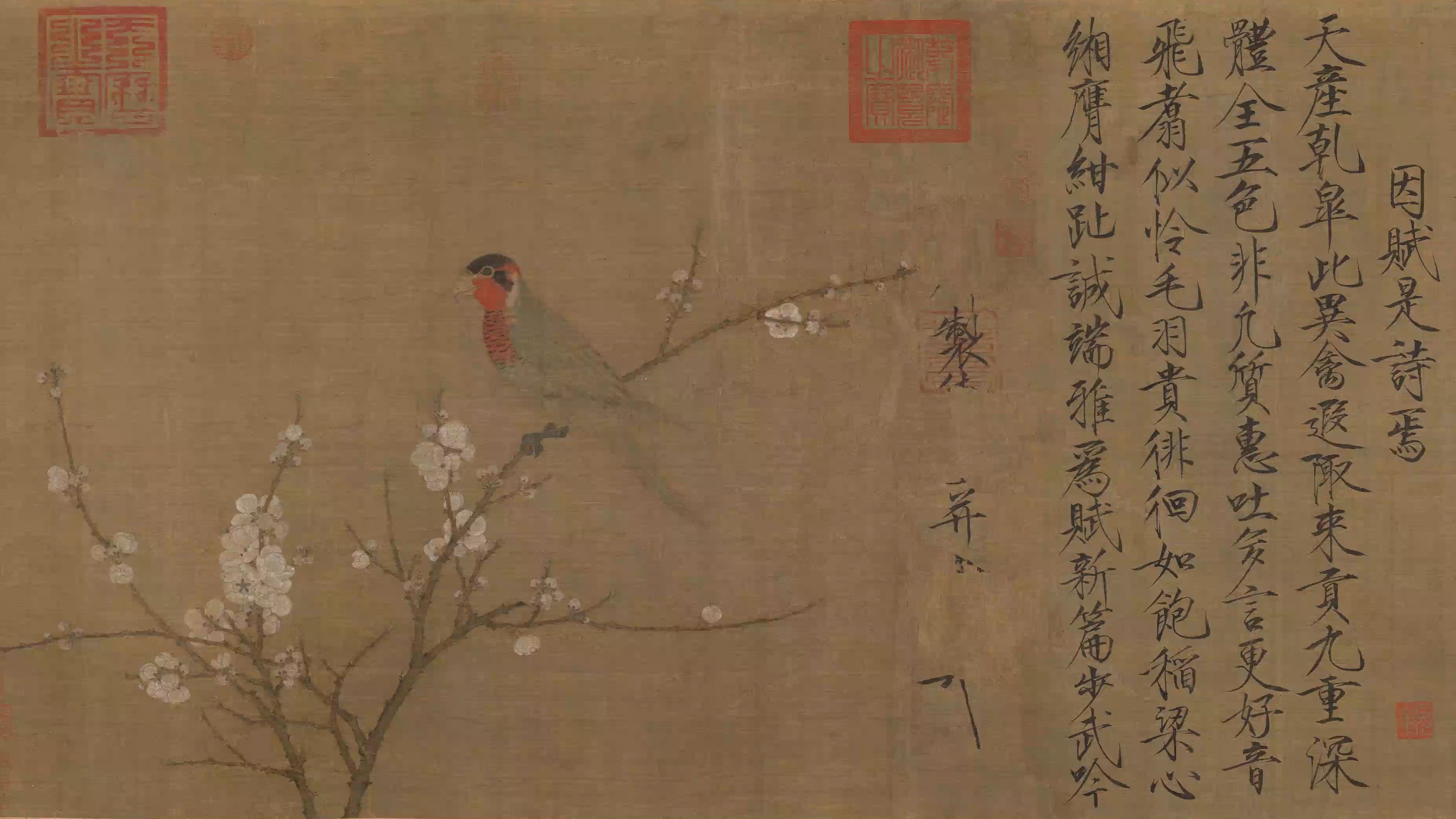
Five-Colored Parrot
《五色鹦鹉图》
- 分类: 艺术瑰宝
- ID: 1866758504340860929
Home CategoryArtsFive-Colored ParrotPlay3 minsFive-Colored Parrot, or Wu Se Ying Wu Tu (五色鹦鹉图), is a masterpiece that embodies Zhao Ji (Emperor Huizong of Song)'s artistic mastery and reflects the prevailing aesthetic sensibilities of his era.ShareCatalogue1. Introdution2. Historical Context3. Artistic Expression4. Composition and Technique5. Cultural Implications
Introdution
Five-Colored Parrot, or Wu Se Ying Wu Tu (五色鹦鹉图), is a masterpiece that embodies Zhao Ji (Emperor Huizong of Song)'s artistic mastery and reflects the prevailing aesthetic sensibilities of his era.
Historical Context
The Five-Colored Parrot symbolizes Huizong's profound reverence for nature and his aspiration to immortalize its beauty through art. The parrot portrayed in this painting was a rare gift from the southern territories, captivating the emperor with its vibrant plumage and graceful demeanor. Huizong's reign witnessed a flourishing of the arts, particularly in the realm of intricate brushwork within flower-and-bird paintings, reaching its pinnacle during the Song Dynasty (960-1279).
Artistic Expression
In the Five-Colored Parrot, Huizong's meticulous attention to detail and mastery of color and composition shine through. The painting features a parrot perched amidst apricot blossoms, its feathers depicted in a rich yet tasteful spectrum of hues. The harmonious color palette, combined with the luxurious texture of the silk canvas, preserves the painting's grandeur through the passage of time. Huizong's dedication to naturalism is evident in the lifelike portrayal of the parrot, where each feather seems to shimmer with a remarkable depth and realism.
Composition and Technique
Aligned with the prevalent 'whole branch' style in flower-and-bird paintings, the composition of the Five-Colored Parrot emphasizes a cluster of plant branches complemented by birds or insects. Huizong eschewed ornate and exaggerated designs in favor of a naturalistic and authentic depiction of his subject. This painting epitomizes the meticulous gongbi style characterized by intricate details and precision, widely cultivated in the imperial painting academy of that era.
Cultural Implications
Beyond its artistic splendor, the Five-Colored Parrot holds cultural and symbolic significance. The parrot's five-colored plumage is believed to correspond to the five hues of the soil utilized in ritual sacrifices, symbolizing the cardinal directions and, metaphorically, the unity of the empire. Thus, the painting serves as a metaphor for the emperor's aspirations for internal harmony and prosperity within his realm.
In essence, Emperor Huizong's Five-Colored Parrot stands as a testament to the artistic achievements of the Northern Song Dynasty (960-1127), encapsulating Huizong's visionary prowess and enduring contribution to China's rich cultural legacy. Photo Gallery(2 pictures)CategoriesArtsTagChinese PaintingCatalogue1. Introdution2. Historical Context3. Artistic Expression4. Composition and Technique5. Cultural Implications- - - []








